

Review contributed by David La Puma, Cellular Tracking Technologies
Over the past two fall migrations, Project Monarch’s miniaturized radio tag technology has captured the attention of monarch enthusiasts. Collaborators attach tiny, solar-powered trackers – which operate at the same frequency as Bluetooth – to monarch butterflies, allowing them to watch monarchs’ individual movements as they migrate. Results have been mesmerizing as we see migratory routes revealed for the first time.
This summer, Project Monarch hosted a four-day Exchange bringing together researchers, government agencies, conservation organizations, technology providers, educators, and public-science partners to review, plan and coordinate monarch movement research across the continent. MBF provided funding to help bring Mexican federal and Reserve-management perspectives to the Exchange. Representatives of Mexico’s National Commission of Natural Protected Areas (CONANP) and the Monarch Butterfly Biosphere Reserve (MBBR) participated in the meeting in Cape May, New Jersey. 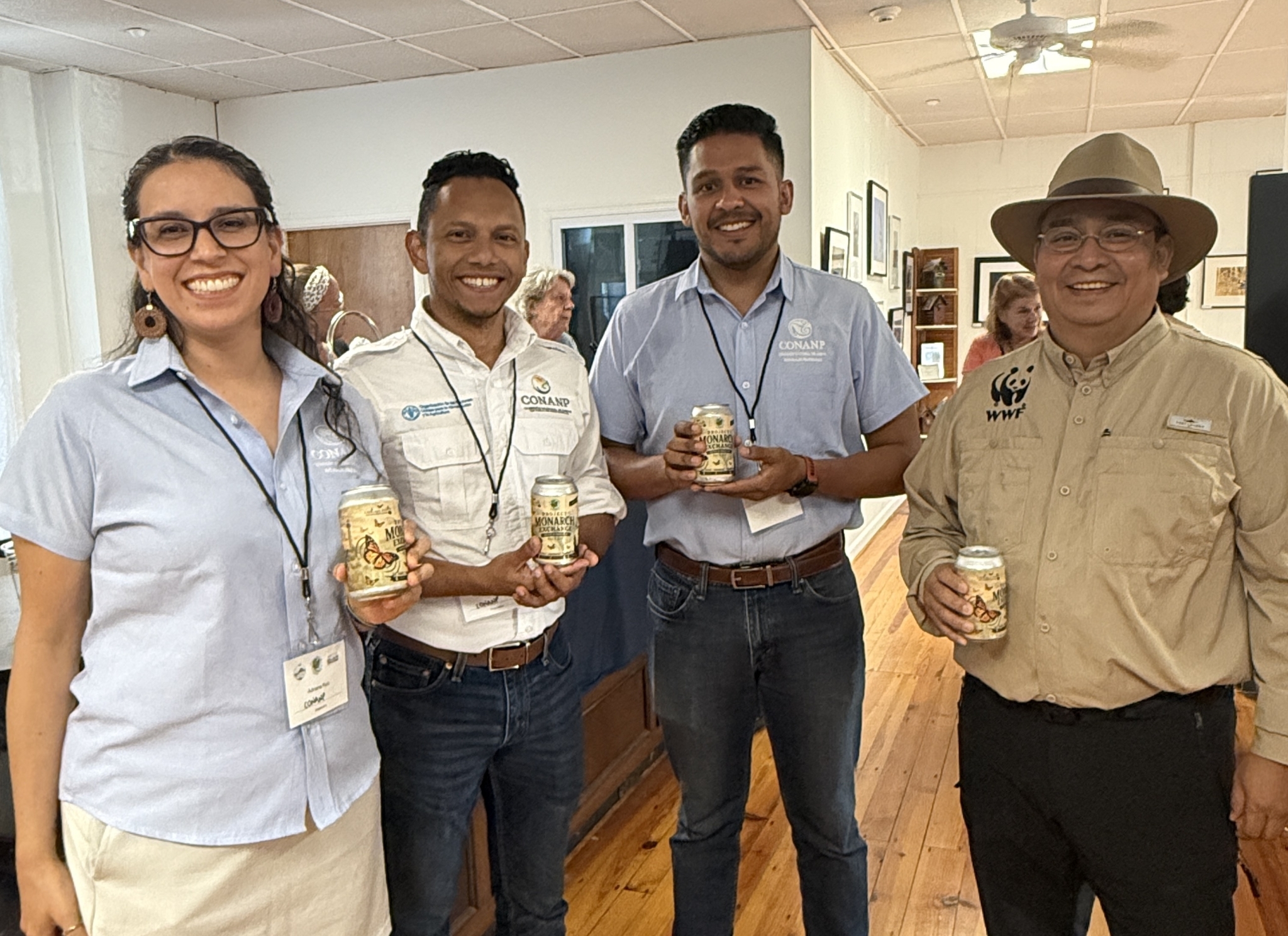
Castro Martínez described CONANP's national protected-area system, community-based conservation model, and opportunities for coordinated monarch protection across Mexico. Ruiz Márquez presented the Reserve's biological and social context, land-tenure structure, principal threats, and management work with ejidos and communities. She also contributed to the Exchange's public-outreach and conservation discussions, emphasizing that research and ngagement at heavily visited overwintering sites must be designed around protection, permitting, community relationships, and visitor-management realities.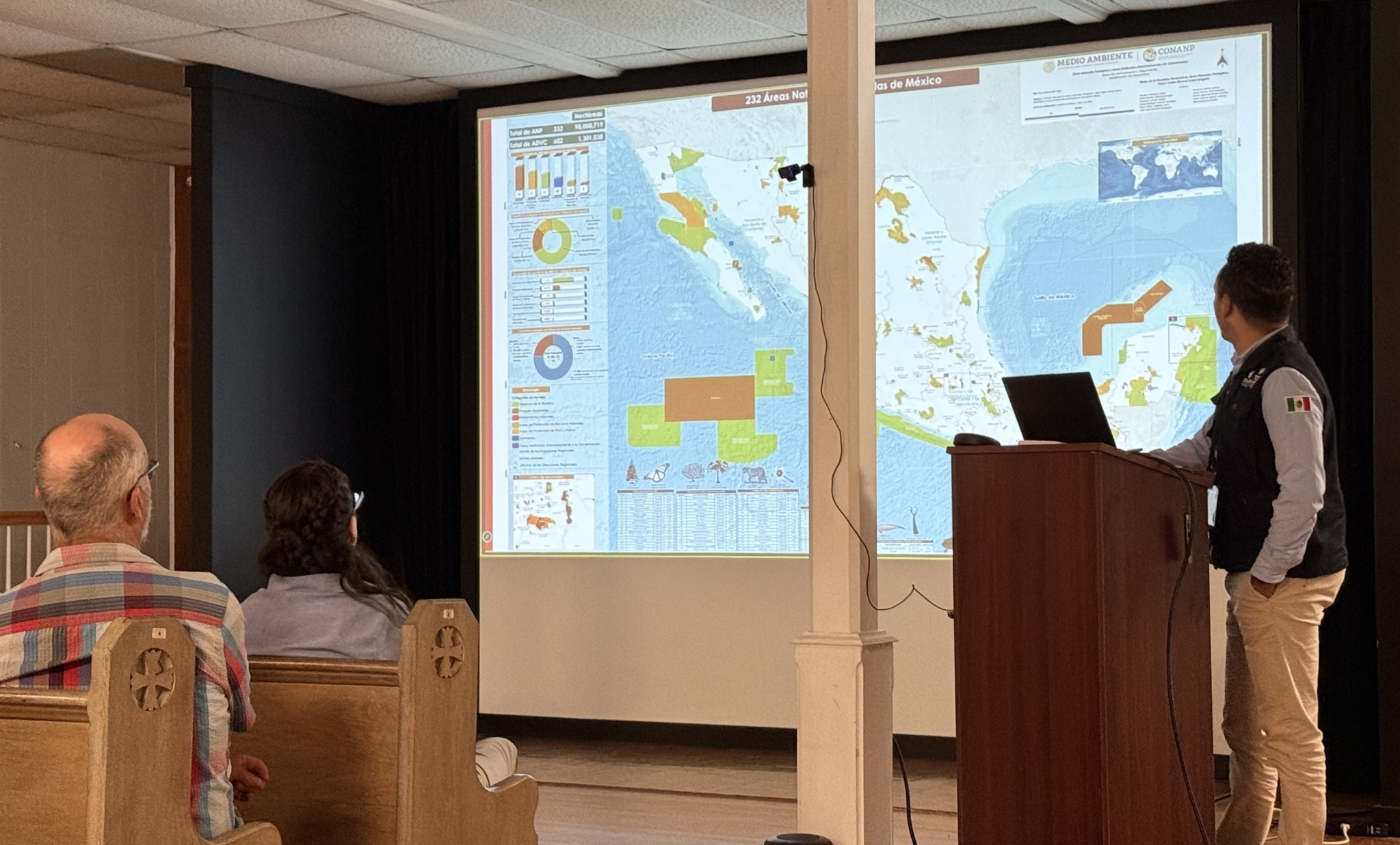
The Exchange also included review of the 2025–2026 tracking season; hands-on BlūMorpho tagging, measurement, and OE-sampling demonstrations; discussion of standardized protocols and data stewardship; app and public-engagement planning; and coordination of future tag and receiver deployments. The relationship-building supported by the MBF grant continued after the meeting. By September, CONANP representatives were participating in follow-up coordination on winter and spring deployments, data-sharing approaches, scientific review, and a trinational visioning process. CONANP has reported interest in permits for as many as 300 tags, staff capacity to conduct deployments, and broader coverage of overwintering sites, protected areas, migration pathways, and population connectivity.


